THE SHORT ANSWER
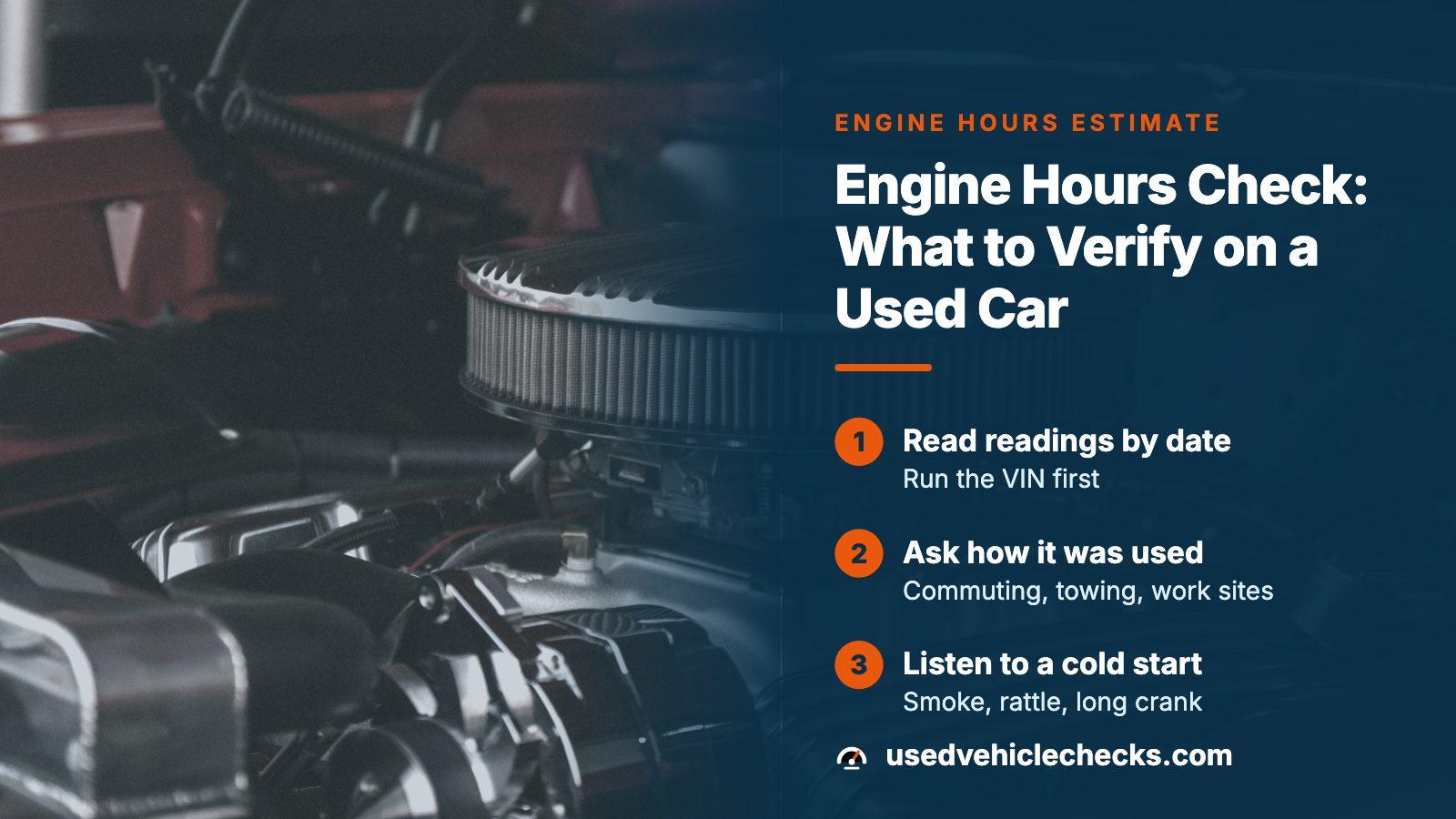
Run the VIN first and read the odometer readings on file in date order. The sources reviewed for this page describe mileage disclosure and recorded readings, not an official engine-hours figure for cars, so treat hours as something you estimate from mileage, service invoices, tire and pedal wear, and how the car was used. A reading that drops or stalls is your red flag.
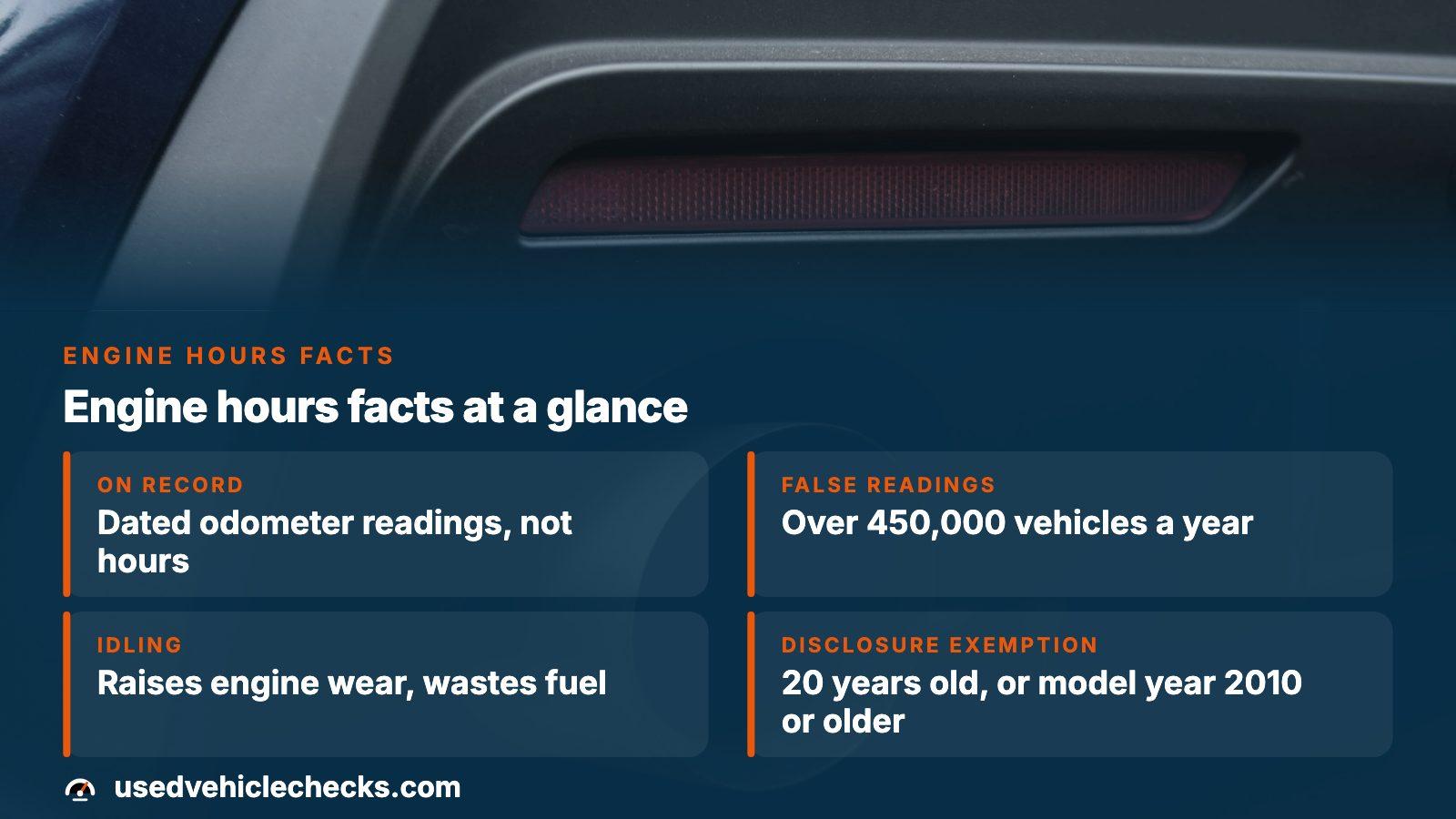
- What is on record
- Dated odometer readings, not engine hours
- False readings
- NHTSA estimates more than 450,000 vehicles a year
- Idling
- Raises engine wear and wastes fuel, per the Department of Energy
- Disclosure exemption
- Vehicles 20 years old or older, or model year 2010 or older
Why hours and miles tell different stories
Miles count distance. Hours count running time, and a motor turns over the whole time it idles, whether or not the wheels move. A delivery van that spends its day parked at curbs with the engine on piles up wear that its odometer barely shows. A highway commuter does the opposite: big mileage, comparatively few hours.
That gap is why buyers ask for an engine hours check. At UsedVehicleChecks the starting point is the odometer record, because it is the one figure tied to the VIN that gets reported at title events, and every other guess about hours is built on top of it.
What a VIN check can and cannot confirm
The federal title database, which the Department of Justice runs, lets a buyer see the latest reported odometer readings along with title brands and salvage determinations. Its consumer pages talk about mileage. I found no official page that defines a standard engine-hours reading for passenger cars, so this page does not invent one.
- Can confirm: odometer readings with dates, so you see whether the number only ever climbs.
- Can confirm: whether the car was sold at auction, salvaged or declared a total loss, which often means long stretches of unrecorded use.
- Can confirm: use type and ownership changes that hint at fleet or taxi work.
- Cannot confirm: a figure for hours of idling, or the exact wear inside the motor.
How idle time wears an engine
Energy Department researchers at the Alternative Fuels Data Center say that letting an engine idle burns fuel for nothing and adds to its wear. They also put the national total at more than 6 billion gallons a year used by parked-but-running vehicles, with about half of that thrown away by drivers idling ordinary passenger cars.
The same page mentions that a number of carmakers now fit stop-start systems, which switch the motor off at a standstill and bring it back when the driver presses the accelerator. For a buyer that matters: a newer car with the feature may log fewer idle minutes than an older one on identical trips. A used pickup that sat running at job sites is the opposite case, and the odometer will not say so.
Running the VIN before you hand over money
- Locate the VIN where the windshield meets the dash or on the driver's door post, and check that it agrees with the title and the ad.
- Type it into the preview, which costs nothing, and buy the report when the car becomes a real contender.
- Open the odometer section and write each reading beside its date.
- Photograph today's dash and add that figure to the end of your list.
- Work out the miles gained between two dates, then ask whether that yearly pace suits the work the car did.
Entering the VIN brings up a no-cost preview. Past the preview, the full report is billed one time and never again. Single reports and packs are laid out on the pricing page.

Red flags that suggest hidden use
| What you see | What it may mean |
|---|---|
| A later entry that lists lower mileage than an earlier one | Possible rollback or a replaced cluster |
| Identical readings at several dates | Odometer not recording, or years of unlogged use |
| Very low mileage on a car with a worn driver's seat | Idle-heavy or short-trip duty, or tampering |
| Auction or salvage entry with a mileage gap afterward | Months of repair and use without any reading |
| Fleet or commercial use type | Plenty of running time that miles understate |
One flag alone is not a verdict. Two together, such as a flat reading and a heavily worn pedal, are a reason to walk or to bring in a mechanic.
Checks you do with your own hands
NHTSA's advice to used-car shoppers: set the title mileage next to the dash figure, compare both with maintenance and inspection paperwork, and look for oil-change stickers on windows, door frames, in the glove box and under the hood. A car claiming 20,000 miles or fewer should still be on its original tires.
- Check the gas, brake and clutch pedals for wear that fits the claimed mileage.
- Ask for every service invoice and look for mileage printed on each one.
- Listen to a cold start and watch for smoke, rattle or a long crank.
- Ask the seller how the car was used: commuting, towing, sitting at work sites.
What a mileage mismatch looks like in practice
From an NHTSA owner complaint
An owner who bought a 2014 Ford Explorer from a dealer reported that a mileage discrepancy surfaced while shopping for an extended warranty. The figure given at purchase was 75,000, yet the owner was later informed the car had really read 138,000 on the day of sale. The complaint is filed under odometer fraud.
That is a gap of tens of thousands of miles, found only after the sale. Pulling the dated readings before buying is the cheaper moment to find it, and the same gap would be far bigger in running hours.
What the law covers, and where it stops
Federal law requires the seller to put a written mileage disclosure on the title when ownership changes. NHTSA lists two ways out of that duty: the vehicle has reached 20 years of age, or it is model year 2010 or earlier. Nothing in the pages I read creates a matching duty to disclose engine hours on a car.
That has a consequence. An aging car can be sold with no written mileage statement at all, so the dated readings from earlier title events become more valuable, not less. If you think a reading was falsified, individual cases go to your state enforcement agency, and NHTSA recommends speaking to a private attorney about your own remedies.
What to do with the result
If the readings climb steadily and the pace fits the car's story, move on to the test drive and an independent inspection. If a reading drops, stalls or vanishes into a long gap, ask the seller for service papers that print mileage and give them a chance to explain. A vague answer is itself information.
Hour meters on boats, generators and equipment are a separate topic, and this report is built around road vehicles identified by VIN. For a car or truck, mileage history plus wear and use clues is the closest honest substitute for an hours figure.
Where this information comes from
- NHTSA: Odometer Fraud — Backs the disclosure law, the exemption ages, the buyer tips and the yearly estimate of false readings.
- VehicleHistory.gov: NMVTIS for consumers — Shows the title record carries latest odometer readings and brand history, with no mention of engine hours.
- Alternative Fuels Data Center: Idle Reduction — Supports the points on idling, engine wear and stop-start systems.
- NHTSA owner complaint 11685228 — owner experience, paraphrased
Sources and photos: Facts checked against the sources above in November 2026. Photos by Victor Hughes, JavyGo and Dain Lindo on Unsplash; diagrams by UsedVehicleChecks.
Keep reading
- Odometer Rollback Check by VIN: Run the Mileage Test Before You PayStep-by-step method for spotting a reading that goes backward.
- Mileage Check by VIN: What the Recorded Odometer Readings ShowHow the dated mileage list for a VIN is read.
- How Many Miles Is Too Many on a Used Car? Age, Pace and ProofWhether the total on the dash is a dealbreaker for the car you want.
- Odometer Discrepancy Check: Find a Mileage Mismatch Before You PayWhat to do when two readings disagree.
Frequently asked questions
Can a VIN check tell me the engine hours on a car?
Not as a figure. The records I reviewed describe dated odometer readings, brand history and salvage events. Hours have to be judged from the mileage pace, service invoices, wear on pedals and tires, and the use type, since no official page I found gives a standard hours reading for passenger cars.
Is high idle time worse for an engine than highway miles?
The Department of Energy ties idling to wasted fuel and added engine wear. It does not give a conversion between idling and miles, so avoid any seller who quotes one as fact. Treat a car used for long idle stretches, such as work-site duty, as having more wear than its odometer suggests.
Does the seller have to disclose engine hours?
The federal rule I read covers written mileage on the title at transfer, with exemptions for cars at 20 years of age and for model year 2010 or earlier. I found no matching federal duty for engine hours on a car, so ask for the figure in writing if it matters to you.
What should I do if the odometer and the records disagree?
Stop and get the paperwork: title, service invoices and the dated readings for the VIN. Do not hand over a deposit while the gap is unexplained. For suspected fraud on an individual sale, NHTSA points consumers to their state enforcement agency and a private attorney.
Is the VIN report free?
Only the preview is free. The full engine-hours report is bought once, as one report or a pack, and does not renew. Current options are on the pricing page, and run it before you leave a deposit on the car.
Now check the car itself
The guide explains what to look for. The report shows what this VIN has on record.