THE SHORT ANSWER
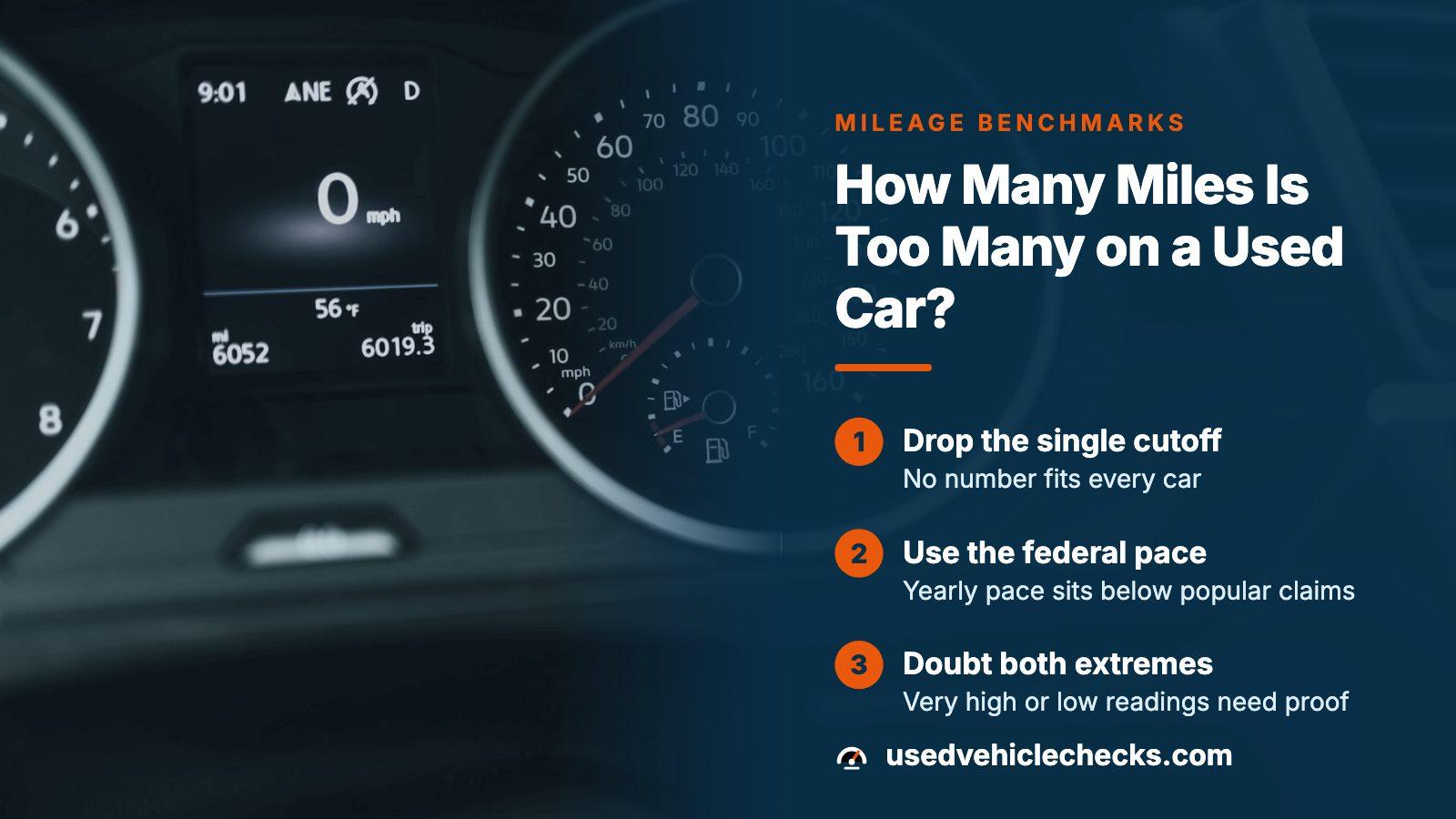
There is no mileage cutoff that works for every car. Federal data puts the average shorter-wheelbase light-duty vehicle at 10,812 miles a year, so 100,000 miles equals about 9.2 years of ordinary driving and looks unremarkable on a nine-year-old car. A reading well above that pace points to hard use, and one well below it is the pattern to verify with dated records.
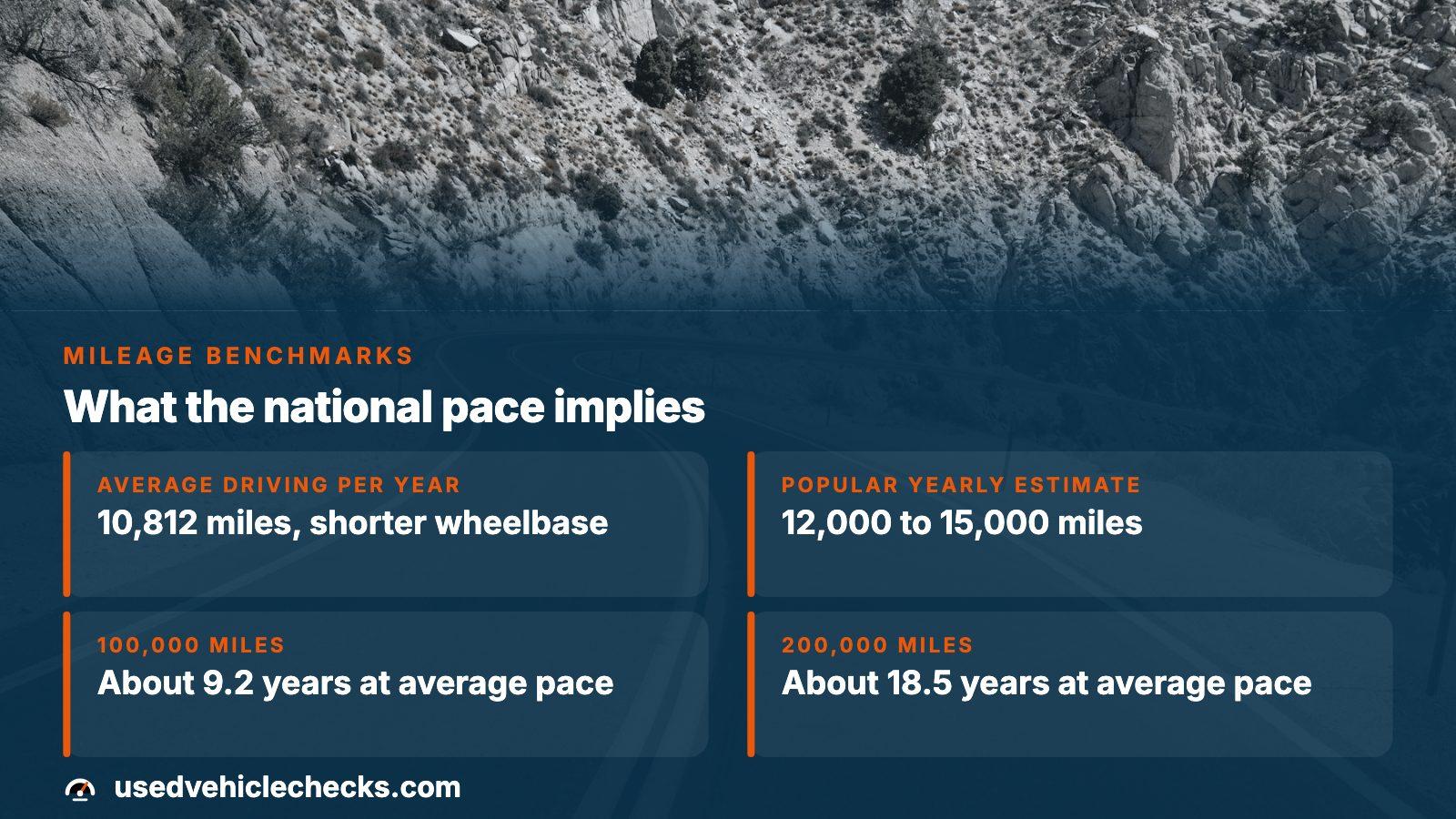
- Average driving per year
- 10,812 miles for shorter-wheelbase light-duty vehicles, 2024
- Popular yearly estimate
- 12,000 to 15,000 miles, above the federal figure
- 100,000 miles
- Equals about 9.2 years at the average pace
- 200,000 miles
- Equals about 18.5 years at the average pace
Why no single mileage works as a cutoff
UsedVehicleChecks starts every used-car review at the odometer, so the first thing to say is that the number alone settles very little. Mileage stands in for two different things at once: how hard a car has been driven and how long it has existed. A nine-year-old car and a four-year-old car can show the same reading and have lived very different lives, and a price that treats them alike is hiding something.
The useful tests are narrower: whether the reading fits the car's age, whether paper backs it up, and what the service records say about the miles on it.
The federal pace sits below the popular yearly figure
The Federal Highway Administration publishes an average of miles traveled per vehicle in its Highway Statistics tables. For 2024, the shorter-wheelbase light-duty class, which holds passenger cars, light trucks, vans and SUVs, averaged 10,812 miles. The 2023 edition showed 11,026, so the figure shifts from year to year, and it is an estimate the agency builds from state travel, fuel and registration data.
The familiar yearly figure of 12,000 to 15,000 sits above both numbers. Hold an honestly driven car to it and the car starts to look low. The yardstick also does not travel: the same table puts motorcycles at 2,401 miles and combination trucks at 55,276, so never carry a car's pace over to either.
What the odometer should read at the average pace
Multiply the car's age by the national average and you have a baseline. Rounded, it looks like this.
| Age of the car | Odometer at 10,812 miles a year |
|---|---|
| 3 years | about 32,000 |
| 5 years | about 54,000 |
| 8 years | about 86,000 |
| 10 years | about 108,000 |
| 12 years | about 130,000 |
| 15 years | about 162,000 |
Treat the baseline as a ruler, not a verdict. A reading within a couple of years of pace, either way, is unremarkable. About 108,000 on a five-year-old car means a decade of average driving packed into half the time. Run it backward and 100,000 miles represents roughly 9.2 years of average driving, 150,000 roughly 13.9 and 200,000 roughly 18.5.
When the reading runs high for the car's age
A reading far above pace is not automatically bad. It asks for an explanation, and the explanation usually sits in the records.
- Use type: rental, fleet and other commercial service explain a steep climb, and the ownership and use record shows whether the car had that past.
- Dated readings: a steady climb across the years means the miles were earned slowly, while a few enormous jumps deserve a question about what happened between them.
- Service invoices: the mileage printed on each invoice is a second set of readings, written by shops with no stake in the sale.
- Wear: pedal rubber, the driver's seat bolster and the steering wheel should look like the miles claimed.
When the reading runs low, the number to doubt
A reading well under pace is the pattern to verify, because mileage moves the asking price. A low figure is not always an honest gain either: rubber, seals and fluids age with the calendar whether or not the car moved, so an old car with a tiny reading still carries old parts.
From an NHTSA owner complaint
A buyer of a 2017 Honda Accord from a private seller paid in June 2026 when the mileage stood at 100,000. A history report later showed 264,897 recorded in July 2025, about eleven months before the sale. The owner filed it as odometer fraud.
That false number looked ordinary. For a car about nine model years old, 100,000 miles lands close to the national pace, so the arithmetic in this guide would have passed it. Plausible is not the same as proven, and only a dated record exposed the gap.
Prove the reading with paper and a mechanic
Put three numbers side by side before you pay: the dash, the title paperwork and the readings recorded for the VIN. The federal title database returns the latest odometer reading it holds, along with brand history and salvage determinations. The program calls its reports intentionally concise and suggests checking the state's full title record too.
From an NHTSA owner complaint
The buyer of a 2014 Honda Accord from a dealer says the listing and the dash agreed on 79,000 miles. During an inspection after the sale, the buyer learned that a mileage report carried a prior figure of 128,000. The dealer was informed and declined to confirm it.
Ask for the dated readings before you sign, while the seller still has a sale to close. Then hire an independent mechanic for a full inspection and get the findings and a repair estimate on paper. The FTC recommends this even for certified cars, and notes that a history report is no substitute because it typically will not show mechanical problems.
Where a records check settles the question
Two moments suit it. The first comes before you drive across town: enter the VIN, read the free preview and decide whether the car earns the trip. The second comes after the test drive and before you sign, when you want every dated odometer reading in order, then the title brands, the accident and damage records and the ownership and use type beside them.
Read the odometer entries first and let the other records explain any odd step. Buying the report is a single transaction rather than a subscription, and the pricing page spells out the choices, packs included, for anyone comparing several cars.
A five-step routine before you commit
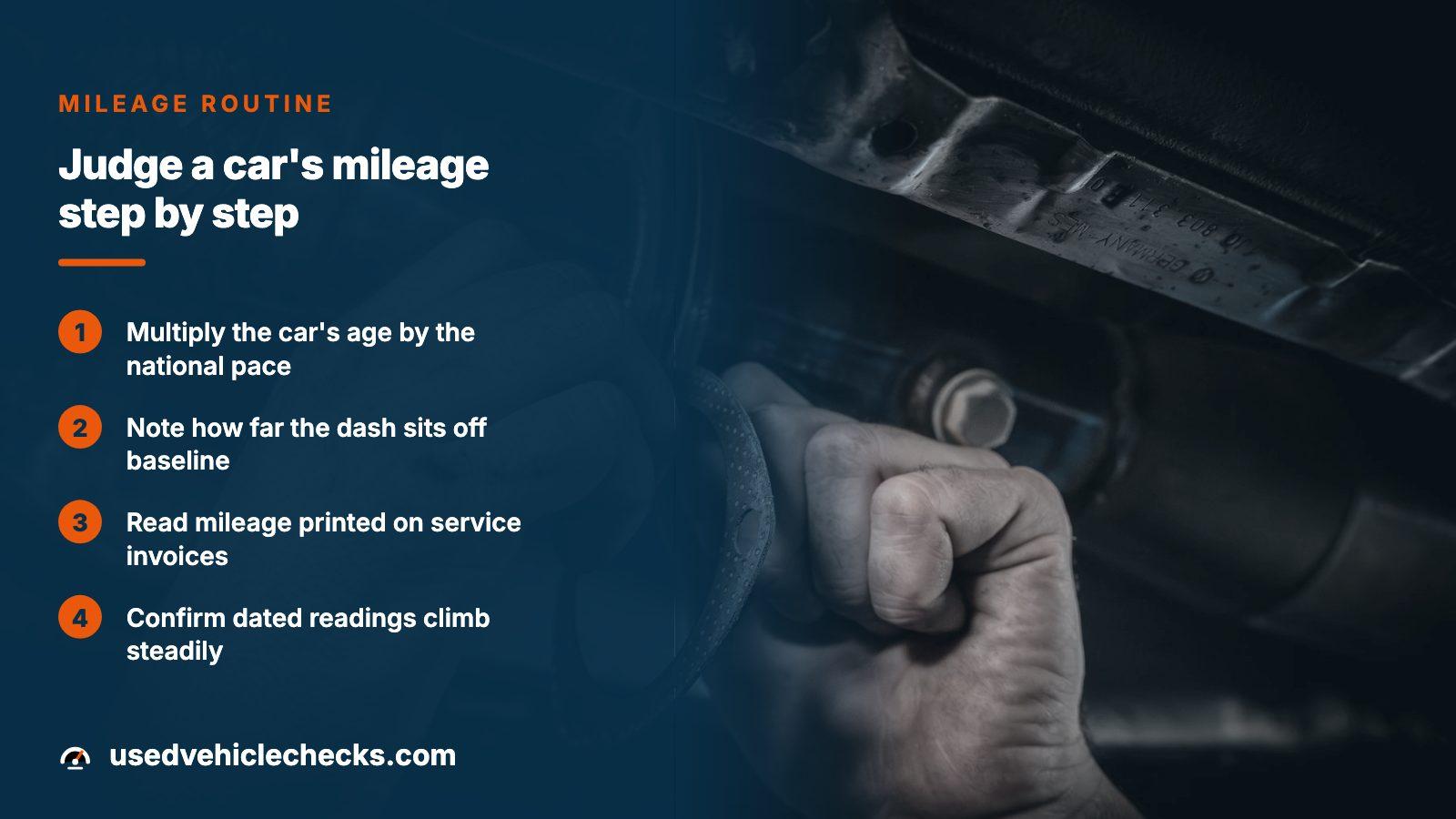
- Work out the car's age and multiply it by the national pace to set a baseline.
- Note how far the dash sits above or below that baseline, and ask the seller why.
- Ask for service invoices and read the mileage printed on each one.
- Open the dated readings for the VIN and confirm they climb without a backward step.
- Book an independent mechanic's inspection and keep the written estimate.
If any step fails, pause the purchase until the seller explains the gap in writing.
Where this information comes from
- FHWA: Highway Statistics 2024, Table VM-1 — Source of the 10,812 and 11,026 averages, the vehicle class definitions and the motorcycle and truck figures.
- FTC: Buying a Used Car From a Dealer — Backs the independent inspection, the written estimate and the point that a history report does not replace a mechanic.
- NMVTIS: information for consumers — What the federal title database returns, including the latest reported odometer reading, and where it falls short.
- NHTSA owner complaint 11758010 — owner experience, paraphrased
- NHTSA owner complaint 11673466 — owner experience, paraphrased
Sources and photos: Facts checked against the sources above in November 2026. Photos by Nathan Dumlao, Martin Fennema and Will Truettner on Unsplash; diagrams by UsedVehicleChecks.
Keep reading
- Mileage Check by VIN: What the Recorded Odometer Readings ShowThe mileage check itself, with each recorded reading in order.
- Odometer Rollback Check by VIN: Run the Mileage Test Before You PayHow to test dated readings for a step backward.
- Car Value by VIN and Mileage: Check the Miles Before You Price ItHow the reading on the dash moves the price you should pay.
- Odometer Discrepancy Check: Find a Mileage Mismatch Before You PayWhat to do when the dash, the title and the records disagree.
Frequently asked questions
Is 100,000 miles a lot for a used car?
It depends on the age. At the federal average of 10,812 miles a year, that reading equals about 9.2 years of driving, so it fits a car of roughly that age. On a far younger car it signals heavy use, and the use type and service invoices become the first things to read. At any age, confirm the reading is genuine.
How many miles a year is normal for a car?
The federal figure for shorter-wheelbase light-duty vehicles was 10,812 miles for 2024 and 11,026 for 2023. That sits under the 12,000 to 15,000 many people quote. Treat it as a national estimate: a long commute can push an honest car well above it, and a household's second car can sit well below.
Is 200,000 miles too high for a used car?
At the national pace, 200,000 miles takes about 18.5 years, so the car is either old or was driven far above average. Neither disqualifies it, but the proof moves to paperwork: dated readings and invoices for the major services. An independent inspection with a written estimate counts for more here than the asking price.
Is a car with very low mileage always a good buy?
No. A reading far below the pace for the car's age is the pattern described in many NHTSA odometer complaints, and an old car that really did sit still has aged rubber, seals and fluids. Ask why the miles are low, then match the number to dated readings and the title paperwork before treating it as a bonus.
Do highway miles make a high reading less of a worry?
Sellers often say so, but a description of the driving is a claim, and dated readings show only how far the car went, not what kind of driving it was. Lean on what can be confirmed: the use type, the service invoices and the condition an independent mechanic finds. A high reading with strong paper is a better risk than a modest one with none.
Now check the car itself
The guide explains what to look for. The report shows what this VIN has on record.