THE SHORT ANSWER
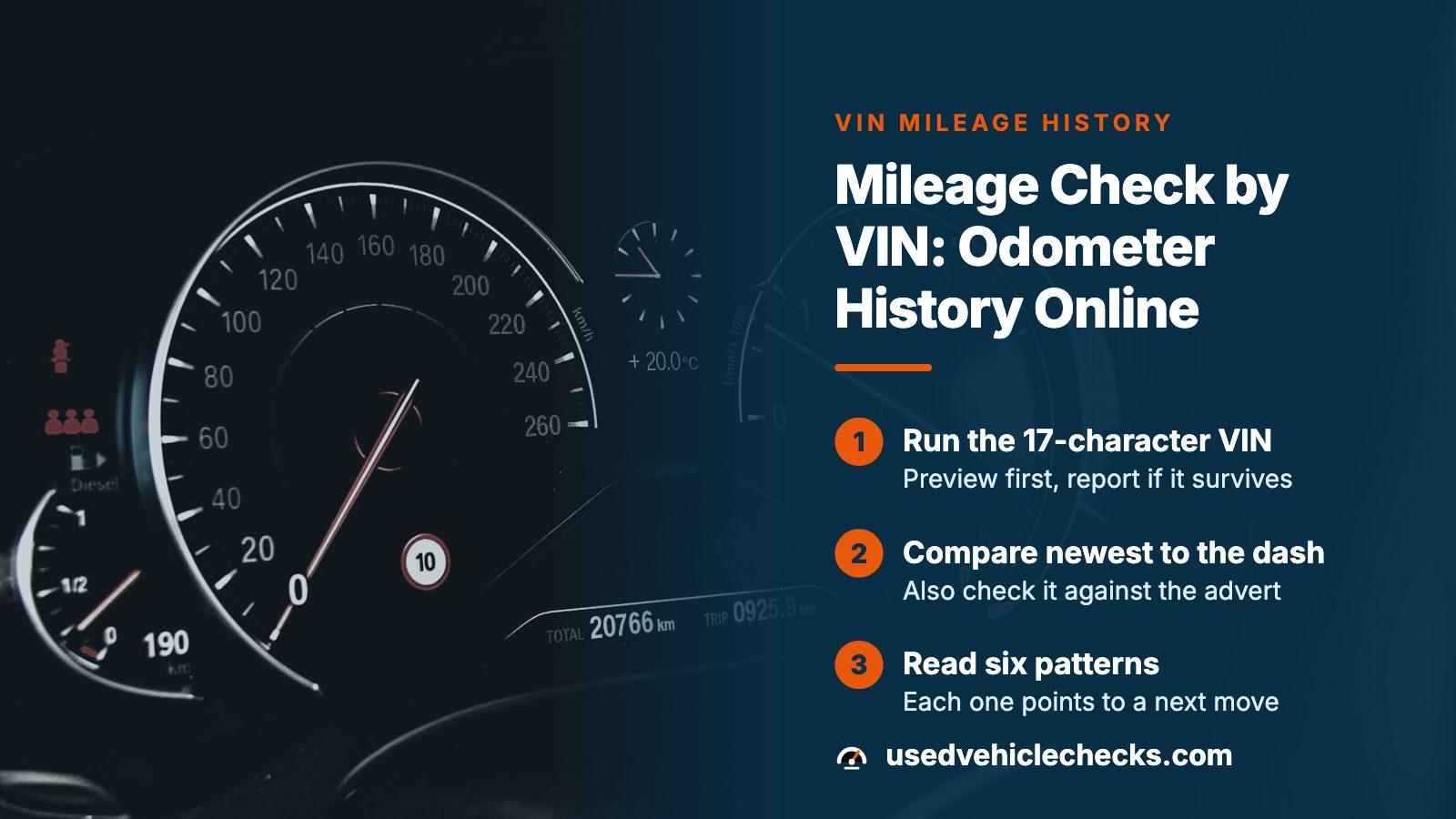
To check mileage history by VIN, run the 17-character number through the preview, then buy the report for any car you still want. It lists odometer readings on record by date. Compare the newest with the dash and the advertisement. A dash figure below an earlier reading, or a leap no driver could cover between two dates, is your cue to stop and get the seller's explanation on paper.
- What you compare
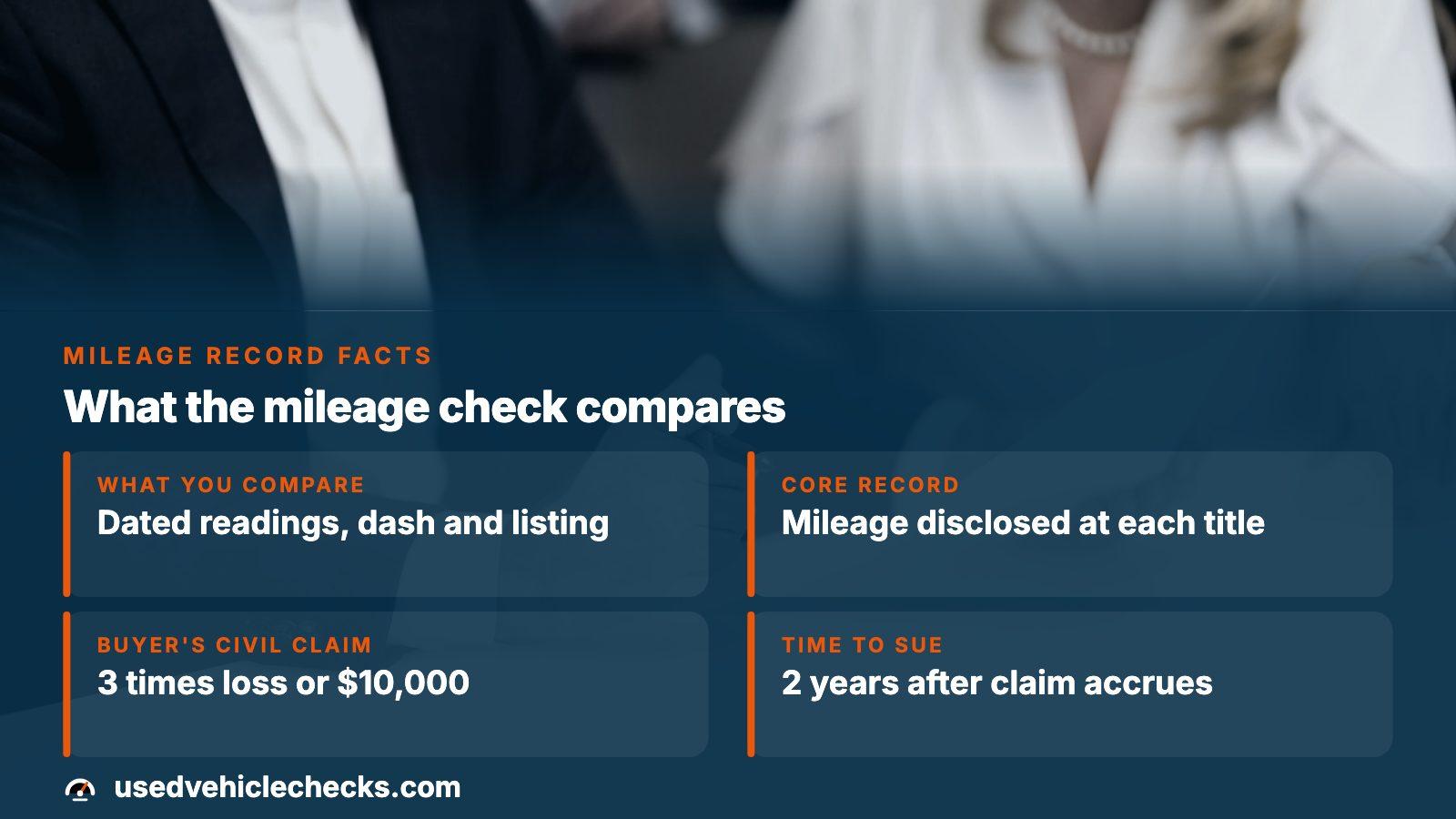
- Dated readings on record against the dash and the listing
- Core record
- The mileage disclosed when each title was issued
- Buyer's civil claim
- 3 times actual loss or $10,000, whichever is greater
- Time to sue
- 2 years after the claim accrues
What a mileage check by VIN puts in front of you
UsedVehicleChecks starts with mileage because price, financing and the years of use left all hang on it. The check gathers the odometer readings tied to one vehicle, orders them by date and sets them beside what the car shows now.
- A dated list of readings, oldest to newest, so you see a slope instead of one number.
- Title brands and any not-actual note, which can explain an odd reading.
- Accident, salvage and auction entries dated near a strange reading, which may be the innocent explanation.
Where the readings come from, and why a list can be short
No agency keeps a running odometer log for a car. A reading exists because someone wrote the mileage down at a given moment, and the biggest such moment is a title transfer. Federal rules require each new title to show the mileage the seller disclosed. The national title database, NMVTIS, must show a buyer that disclosure as of the day the title was issued, plus later mileage only where the state noted it.
That last condition explains thin records. One car shows a reading at every transfer; another, titled in a state that logged less, shows one or two. A short list says little about how the car was driven. NMVTIS takes data from state title offices, salvage and junk yards, recyclers and insurers, and its consumer page calls the report deliberately brief.
Running the check before the money moves
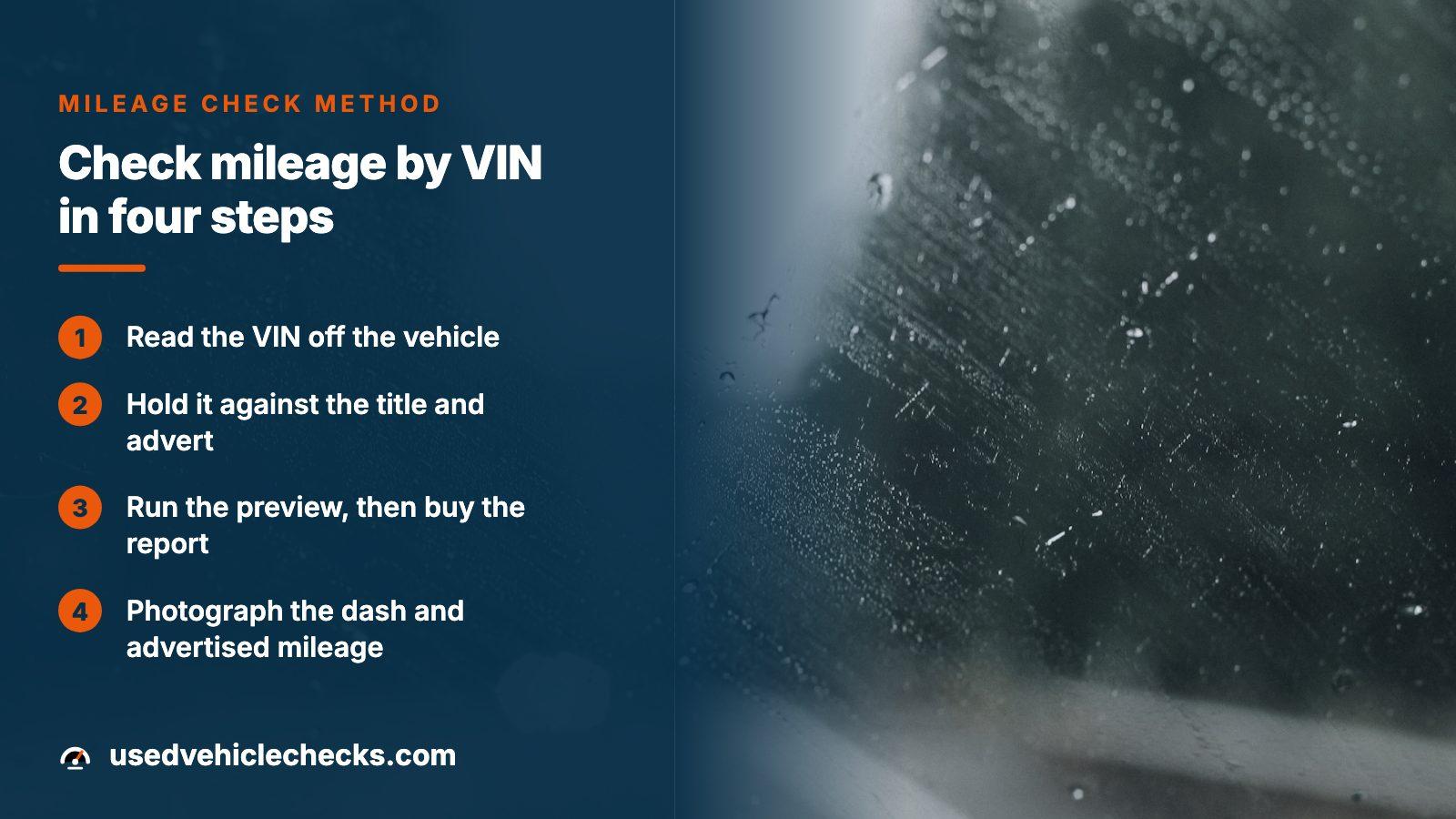
- Read the VIN off the vehicle: the stamped plate at the driver-side base of the windshield, then the door-post sticker. Both should match.
- Hold that number against the title and the advertisement. A mismatch means the car is not what was described, and mileage can wait.
- Run it through the preview.
- If the car is still in the running, buy the report and read the odometer readings first, oldest to newest.
- Photograph the dash and the advertised mileage the same day, since listings get edited once questions start.
From an NHTSA owner complaint
An owner who bought a 2014 Ford Escape from a dealer told NHTSA the title and plates had not arrived yet. The owner ordered an outside vehicle report in the meantime. It put the mileage at 119,000, while the car had sold at 94,000.
The report was read after the sale, when disputing it was the only route left.
What a DMV odometer check can and cannot do
A state motor vehicle agency is a record keeper. When a title changes hands it logs the reading the seller disclosed, and some states attach a note. Oregon, for example, marks a blank digital display as not readable and a stuck odometer as not actual; neither note can be removed from the title later.
What an agency will release to a buyer holding only a VIN is its own policy, so ask first. The state pages reviewed for this guide explain how readings are recorded, not a buyer-facing history lookup. Treat any DMV answer as one more record, not a replacement for the VIN readings.
Checking mileage from the paperwork in your hand
Buyers often ask how to check the odometer from the vehicle registration. The federal disclosure rule puts the reading on the title, or on the reassignment form when the seller is not the titled owner, so that is the document to read. The signed statement gives the seller's name, the date, the vehicle's identity and one of three declarations: the figure is accurate, the display has run past what the odometer can show, or it does not reflect the true mileage.
Then check the car. If a replaced cluster could not keep the mileage, the unit is zeroed and a notice on the left door frame must give the old reading and the date.
From an NHTSA owner complaint
A buyer of a 2010 Dodge Charger from a private seller told NHTSA the car read 71,000 at purchase. The mismatch surfaced at registration, where the mileage was 162,185.
That buyer learned it after paying. The same question could have been put to the seller in person.
Reading the list: six patterns and what to do about each
| What the readings show | Likely meaning | Your move |
|---|---|---|
| Steady climb, newest reading near the dash | Record and display agree | Move on to inspection and service history |
| An older reading above the dash | Altered display, or an unrecorded cluster swap | Ask for the repair invoice; no paperwork, no deal |
| Same number at several events | Stopped odometer, or events that never read it | Look for a not-actual note and ask what failed |
| A leap too big for the dates | Heavy commercial use, or one mistyped entry | Check use type, then service records |
| A long stretch without readings | Stored car, or a state that wrote little down | Ask for invoices covering the gap |
| Status says not actual or exceeds mechanical limits | Honest label on a car with a known odometer problem | Price it as unknown mileage |
Judge pace against the work the car did: delivery and fleet use pile on miles, a garaged weekend car barely moves. A high number is not proof of tampering; a number that contradicts a dated record is. Either way, pay an independent mechanic for an inspection, which is also the advice on the federal title-record site.
What the law gives a buyer when the numbers do not fit
At transfer the seller owes the buyer a written mileage statement, or a written note that the true figure is unknown when the seller knows the display is wrong. Private sellers are bound as much as dealers are. A false statement is illegal, and a business acquiring a car to resell may not take an incomplete one. A knowing and willful violation can bring a fine, up to 3 years in prison, or both.
A buyer who proves intent to defraud can sue for the larger of $10,000 or 3 times the actual loss, and a winning buyer also recovers costs and reasonable attorney fees. The deadline is 2 years after the claim accrues, so see a consumer attorney soon after you find the gap.
- Model year 2011 and newer: a statement is required until the car is 20 years old.
- Model year 2010 and older: the duty ended after 10 years, so a missing statement on an old car is no clue by itself.
- Dealers keep the statements they give and receive for 5 years.
Cost, and your move after the result
The preview costs nothing and commits you to nothing. The report afterward is bought once, with no subscription, and a 3, 5 or 10 report pack suits anyone comparing several cars. Current amounts are on the pricing page.
If the readings disagree with the dash
Before buying, stop, screenshot the listing and the readings, and ask the seller to explain in writing. After buying, keep the title, the listing and the readings together. Owners file odometer complaints with NHTSA, and a state's chief law enforcement officer can bring a case for buyers under the federal chapter.
Where this information comes from
- NMVTIS: understanding a vehicle history report — Lists the odometer reading among the report's key indicators, names the data suppliers and says the report is kept short.
- 28 CFR 25.53: what NMVTIS must provide — Backs the title-date disclosure plus any later mileage the state noted.
- 49 CFR part 580: odometer disclosure requirements — Contents of the signed statement, the three declarations, retention periods and the age exemptions.
- 49 U.S.C. chapter 327: odometers — Statute text for the tampering ban, the door-frame notice, criminal penalties and the buyer's damages claim.
- Oregon DMV: odometer disclosure — One state's handling of disclosures, the not readable and not actual notes, and voluntary readings.
- NHTSA owner complaint 11678874 — owner experience, paraphrased
- NHTSA owner complaint 11736329 — owner experience, paraphrased
Sources and photos: Facts checked against the sources above in November 2026. Photos by Viktor Theo, Cole Keister and Carrie Allen www.carrieallen.com on Unsplash; diagrams by UsedVehicleChecks.
Keep reading
- Odometer Rollback Check by VIN: Run the Mileage Test Before You PayHow to test the readings you just pulled for a backwards step.
- Odometer Discrepancy Check: Find a Mileage Mismatch Before You PayWhat to do when the records and the dash tell different stories.
- Title Check by VIN: A Step-by-Step Check, Odometer Entries FirstThe title brands and status notes that sit beside the mileage.
- Car Value by VIN and Mileage: Check the Miles Before You Price ItHow confirmed mileage moves what a car is worth.
Frequently asked questions
Can I check a car's mileage history for free?
The preview is free; look first and commit later. The dated list of readings sits in the report, which is bought once and never renews. Nothing is charged until you choose to buy it, so run the preview, then decide whether this car deserves the report.
How accurate is an odometer check by VIN?
It is only as accurate as the records behind it. A clean list means no recorded reading contradicts the dash, not that the dash is true. A change made before the first reading, or inside a long gap, leaves nothing to find.
Is there a DMV odometer check I can run myself?
Your state agency logs the mileage disclosed on each title and may attach a note such as not actual. The pages reviewed here describe that recording, not a public history by VIN, so ask your own DMV what it releases.
Can I check the odometer from the vehicle registration?
Not reliably. The federal rule asks for the mileage on the title or reassignment form, so read those and the signed statement, then compare the figure with the dash and the VIN readings. If the seller cannot show the title, ask why before money moves.
What if the odometer was replaced, will the check show it?
A replacement that keeps the mileage leaves the readings running as normal. One that cannot is set to zero, with a notice on the left door frame giving the old mileage and the date. Look there and ask for the invoice.
Now check the car itself
The guide explains what to look for. The report shows what this VIN has on record.