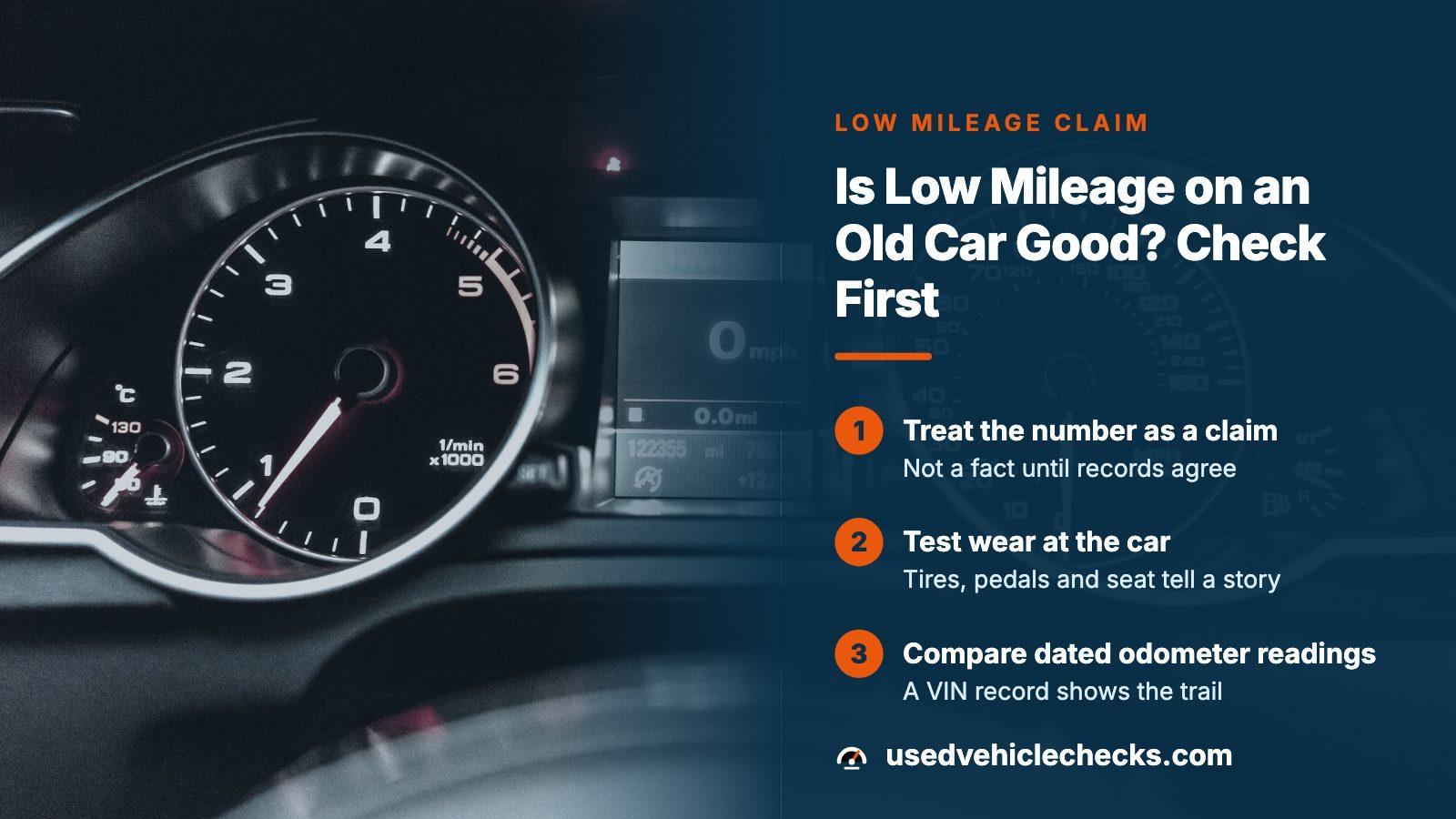
THE SHORT ANSWER
Low mileage on an old car can be a bargain or a warning. Treat the figure as a claim, not a fact. Compare it with the title, dated service records, tire and pedal wear, and the odometer readings in a VIN history report. If those agree, the car is probably what the seller says. If they disagree, walk away or get an inspection first.
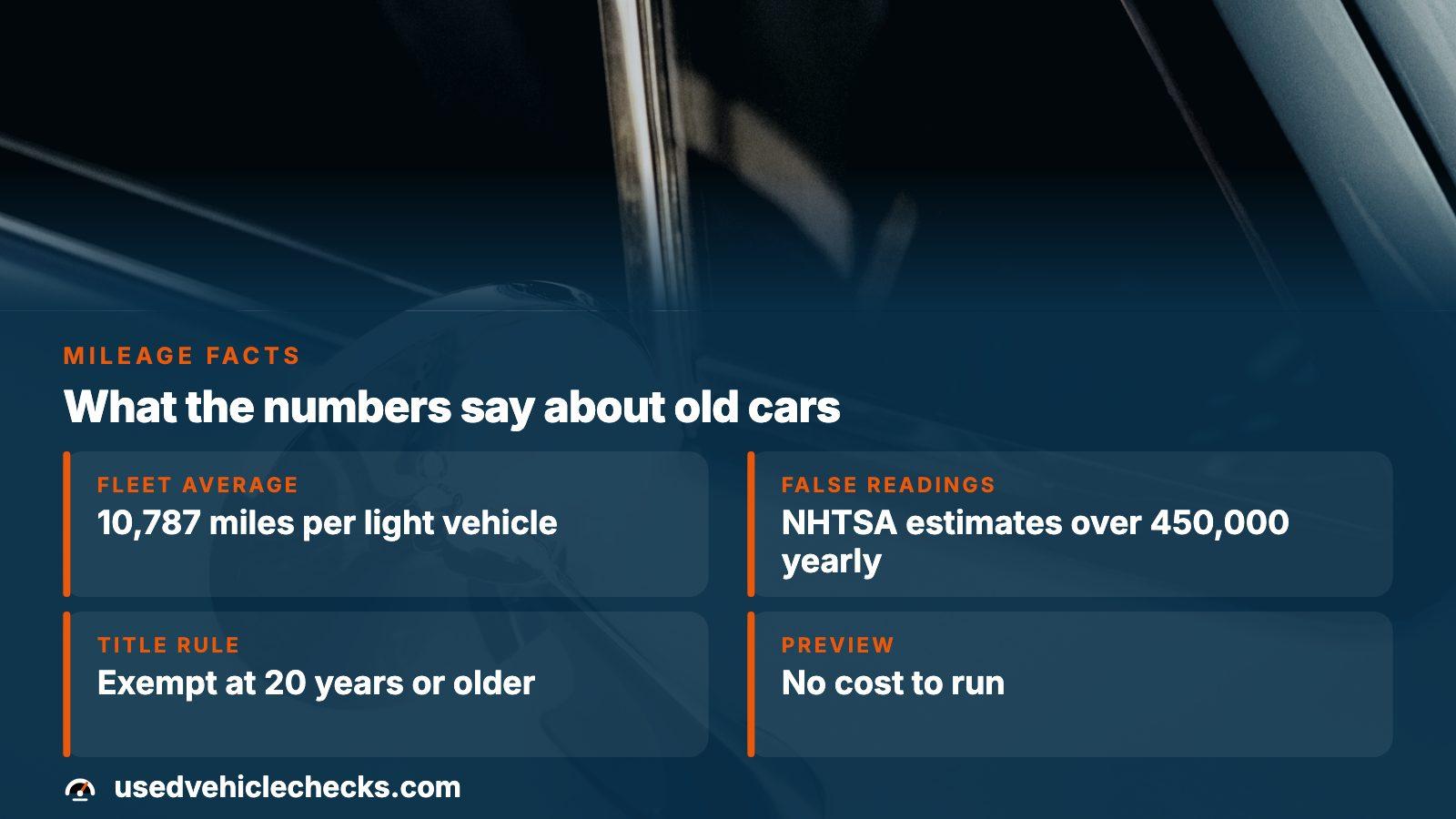
- Fleet average
- 10,787 miles per light vehicle in 2024
- False readings
- NHTSA estimates over 450,000 sold yearly
- Title rule
- Disclosure exempt at 20 years or model year 2010 and older
- Preview
- No cost to run; the report is bought once
Why a small number on an old car is only a claim
A odometer is a counter, and a counter can be wrong, replaced or altered. That is true of any car, but it matters more on an old one, because the gap between what the number says and what the car looks like is where fraud hides. In NHTSA's terms, fraud means interfering with the odometer on purpose so it displays fewer miles than the car has really covered.
The agency also says it is hard, though not impossible, to tell when this has happened, and harder still with digital displays. So the useful question is not whether the number is low. It is whether anything independent of the dashboard says the same thing.
What low should mean for the car's age
Start with a yardstick. Federal highway statistics put the 2024 average at 10,812 miles per vehicle for cars, SUVs and short-wheelbase light trucks, with 10,787 once larger light trucks and vans join the pool. These are fleet averages, so they describe how a country drives, not how your seller did.
Still, they give you a rough sum. Multiply by the car's age and compare. A car many years old with a fraction of that total has either lived a very unusual life or been wound back. Neither is impossible, which is why you need evidence.
| Pattern | Likely reading | Next step |
|---|---|---|
| Low miles, thick service folder, dated stickers | Genuinely little use | Confirm with a history report |
| Low miles, no paperwork at all | Unproven | Ask for any record, then check the VIN |
| Low miles, worn pedals and seat | Mismatch | Treat as a possible rollback |
| Low miles, recent dash or cluster work | Unknown starting point | Ask what was replaced and why |
How genuine low-mileage cars usually look
Real low-use cars tend to tell a consistent story. The paint, carpet and driver's seat bolster all look the same age as each other. The service history shows oil changes by date rather than distance, because an owner who drives little still changes fluids on the calendar. Garage storage, a second car in the household or a retired owner are common, checkable explanations.
Sellers who have a real story usually have paper to go with it. Receipts, old inspection reports and a fat owner's manual folder cost nothing to show. A seller who bristles when you ask for them is giving you information too.
Physical clues to test at the car
NHTSA lists a handful of buyer checks, and most work well on an old car. Do them in daylight, and take a photo of each.
- Compare the title's mileage with the dashboard and look hard if the notation is smudged or hard to read.
- Match the figure against maintenance and inspection records, and hunt for oil-change stickers on windows, door frames, the glove box or under the hood.
- Check the tires: under 20,000 miles on the clock should mean the original set.
- Judge the gas, brake and clutch pedals, plus the steering wheel and seat, against the claimed use.
- Look for loose trim, fresh screws or fingerprints around the instrument cluster.
Rubber parts, hoses and fluids also age with time whether or not the car moves, so an old car with few miles can still need a long list of work. Ask a mechanic what they would replace on a car that age.
What a VIN record adds that a dashboard cannot
The Justice Department's national title system summarizes a car through five headings: where it is titled and since when, brands, the odometer entry, total-loss events and salvage events. It says checking the odometer entry helps reveal discrepancies, and that fraud can leave a buyer overpaying or driving an unsafe car.
Dated readings are the useful part. A figure logged at a past sale or title change gives you a floor: today's dash cannot honestly show fewer miles than an earlier record did. That one comparison catches a lot of tampering, and it works even when the car looks perfect.
The national system holds no repair history, so a clean record is not a clean bill of health. Pair it with an independent inspection.
The title rule that leaves old cars unprotected
Sellers must put the mileage on the title in writing when ownership changes, and a false figure has to be flagged for the buyer. NHTSA notes that vehicles 20 years old or older, or model year 2010 and older, are exempt from that written disclosure.
For an old car, this means the paperwork may carry no mileage statement at all. The absence is legal, not suspicious. It does mean you lose one cross-check, so lean harder on service records, physical wear and the dated readings in the VIN history.
Red flags that should end the conversation
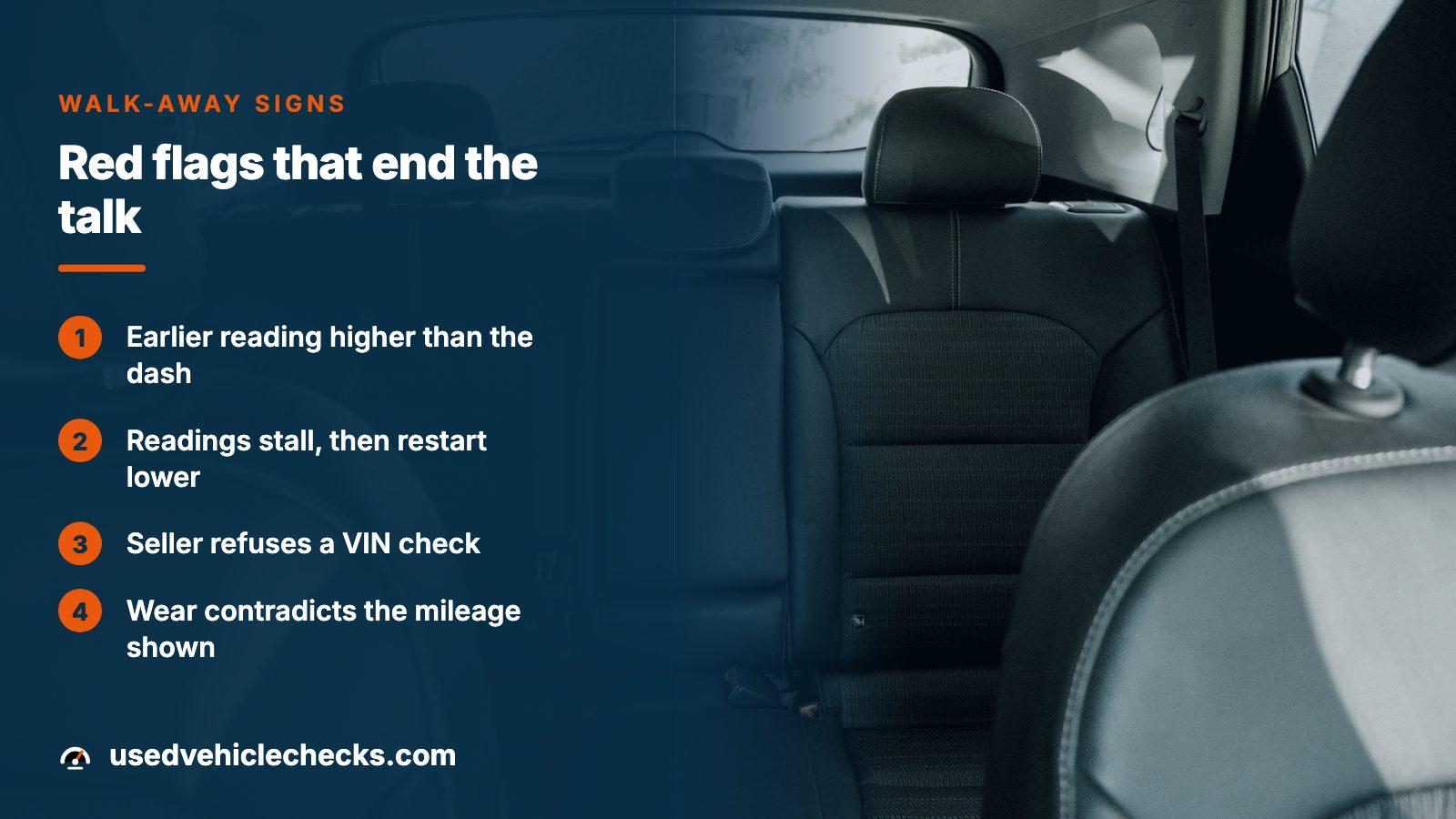
- The history shows a higher reading in an earlier year than the dash shows now.
- Readings stall for years, then restart at a lower figure.
- The seller refuses a VIN check or an independent inspection.
- Wear on pedals, seat or steering wheel is heavy for the number shown.
- A replaced cluster comes with no written explanation.
One of these deserves a pointed question for the seller. Spot a pair and the sensible move is usually to leave.
Run the check before you negotiate
Before driving out, get the VIN in writing and feed it to the UsedVehicleChecks preview. Nothing is charged at that stage, and what it surfaces tells you if the mileage entries are worth a report purchase. Should it look promising, the report itself is paid once, with no recurring plan; current options sit on the pricing page.
Open the odometer section first, then read the title and brand entries around it. If you want a deeper look at rollback patterns, the odometer rollback check guide walks through them.
Price it honestly once the story holds
If the evidence supports the number, low mileage deserves a premium, but a modest one, because age still lowers the car's condition in ways the odometer cannot. If the evidence is thin, price the car as though the number were unknown.
Write the reading, the date and the source of your proof into the bill of sale. Should the figure later prove false, that note is the first thing a state enforcement agency or an attorney will want to see.
Where this information comes from
- NHTSA: Odometer Fraud — buyer checks, digital odometer warning and the disclosure exemption
- FHWA: Highway Statistics 2024, Table VM-1 — national average miles per vehicle
- NMVTIS: Understanding a vehicle history report — what the national title record includes and omits
Sources and photos: Facts checked against the sources above in November 2026. Photos by Ambitious Studio* | Rick Barrett, THLT LCX and Linus Belanger on Unsplash; diagrams by UsedVehicleChecks.
Keep reading
- Odometer Rollback Check by VIN: Run the Mileage Test Before You Payhow rollbacks show up in the record
- How Many Miles Is Too Many on a Used Car? Age, Pace and Proofthe other end of the mileage question
- Average Miles Per Year: What Federal Data Says Cars Really Covernational yearly figures in more detail
- Mileage Check by VIN: What the Recorded Odometer Readings Showrun the mileage lookup step by step
Frequently asked questions
Is low mileage on a 20-year-old car a good sign?
It can be, if service records, wear and dated history readings agree with it. Since vehicles that old are exempt from written title disclosure, the paper trail may be thin. Without independent proof, the figure is only the seller's claim and should be priced that way.
Can a car sit too long and be worse for it?
Yes. Time ages rubber, fluids and seals regardless of use, so a rarely driven car may need hoses, belts, tires and fluids replaced. A mechanic can tell you what work the car's age calls for, which the mileage alone cannot.
How do I know if the odometer was rolled back?
Compare the dash against the title, dated service records and the readings in a VIN history. An earlier reading higher than today's is the clearest sign. NHTSA also suggests checking tires, pedals and stickers for consistency with the claimed miles.
Does a VIN report prove the mileage is real?
No. It shows readings that were recorded at past events, so it can expose a drop or a stall, but a car with no entries gives it nothing to compare. Use it alongside records, a physical check and an inspection.
What should I do if I suspect odometer fraud?
Stop the purchase, or if you already bought, keep every document and contact your state's enforcement agency. NHTSA directs individual cases there and takes large-scale scheme reports on its Vehicle Safety Hotline. Consider a private attorney for your own remedies.
Now check the car itself
The guide explains what to look for. The report shows what this VIN has on record.