THE SHORT ANSWER
Look for a box or line labeled odometer reading, mileage or odometer disclosure, normally in the part of the title used when ownership changes. Federal rules fix what the statement must say, not where it sits, so the position varies by state. A clean entry shows whole miles, a date, two signatures and no warning box ticked. Then compare the figure with the dash and the VIN's recorded readings.
- Format
- Whole miles only, no tenths
- Layout
- Set by each state, not by federal rule
- Exempt cars
- Model year 2011 and newer, once 20 years old
Where to look on the paper
Start with the section of the title meant for the next owner. On many states' forms that is the back, under a heading about assignment or transfer of ownership, and the odometer line shares space with the seller's signature and the buyer's details. Some states print a mileage figure on the front as well, next to the issue date, to show what was declared at the last transfer.
Here is the catch with any article that promises one fixed spot. The federal regulation behind this, 49 CFR Part 580, prescribes the content of the statement and ships a model form, but it leaves page layout to the states. Pull up a title from the state you are buying in and read its headings instead of hunting for a position you were told about.

What a complete entry holds
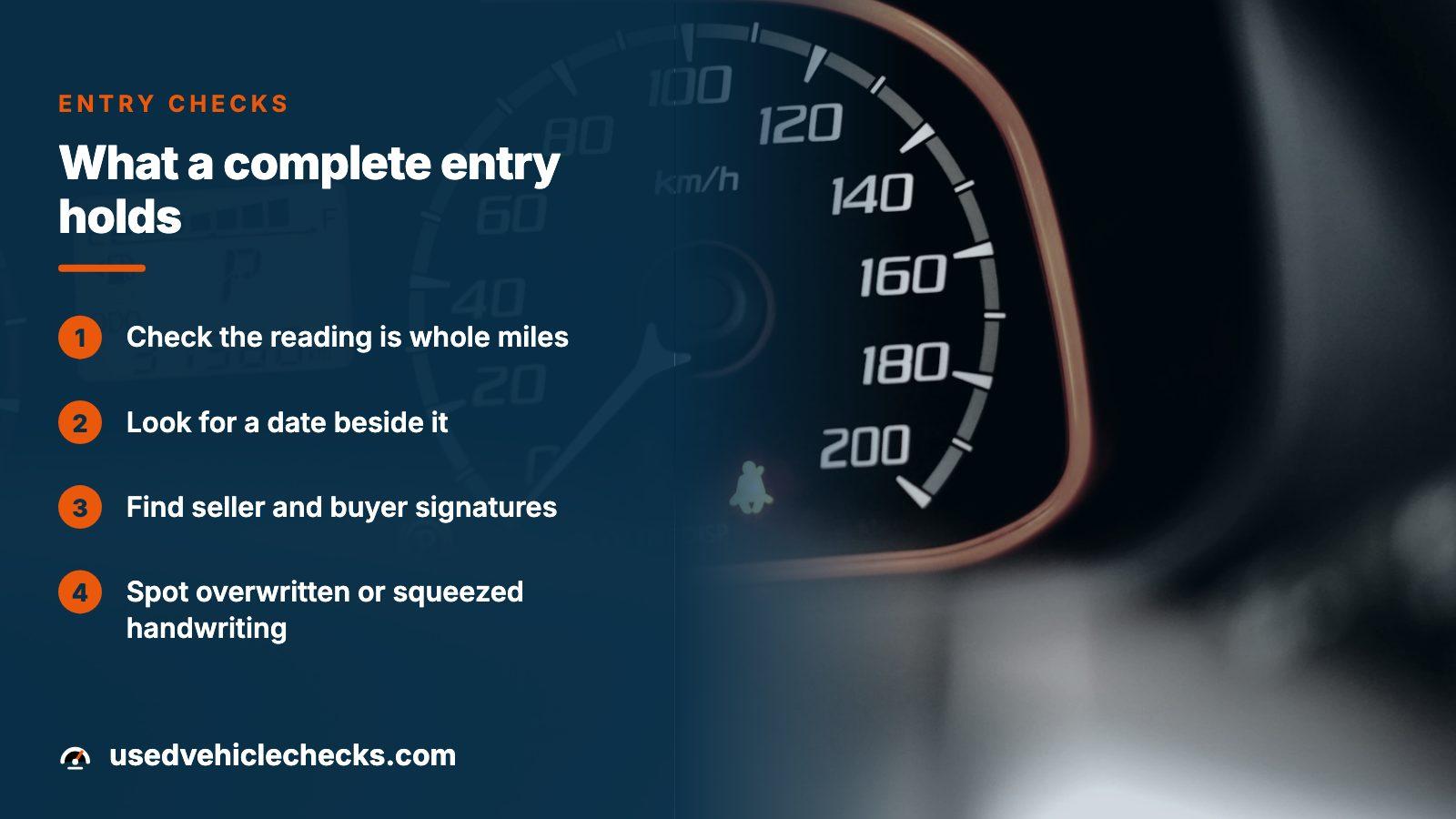
A properly finished disclosure is more than a number. Federal law has the named owner enter the reading on the title document itself, then sign and print a name under it. The date of transfer, both parties' names and addresses and the identity of the car also appear. Here is a quick checklist to run in the driveway.
- The reading is in whole miles. Tenths are not allowed.
- A transfer date is written next to it.
- The seller's signature and a printed name are both present.
- The buyer's signature and printed name are present once the sale is done.
- The seller on the paper is the same person named as owner on the front.
- No handwriting looks squeezed, overwritten or in a different pen from the rest of the line.
If several people own the car, one seller's signature is enough. A blank where the figure should be is a different matter, and it is covered below.
The boxes that change the meaning
Most disclosure blocks include tick boxes next to the number. The federal model form has two. One declares that the count went beyond what the gauge was built to display, which suits an older analog dash that wrapped around. The other declares that the figure does not match real use, under a bold discrepancy warning.
Treat a ticked box as the price talking
Ticking that second box means the seller is admitting in ink that the dash cannot be believed. That can be honest, for example after a cluster swap, but the car's value no longer rests on the displayed figure. Ask what happened, ask for the paperwork behind it, and price the car on its condition and records rather than the number.
Silence is the version to worry about more. A seller who knows the dash is wrong and writes a normal-looking figure anyway has made a false statement on a federal form, which the rule says can bring fines, imprisonment or both. Your job as a buyer is to catch that before you sign.
When the line is blank, the title is lost or a lender holds it
A blank mileage line on a title being handed to you is a stop sign. The disclosure is a condition of the transfer, so ask the seller to complete it properly before money moves, and do not agree to fill it in yourself unless the paperwork route allows it.
One legitimate exception exists. When the seller's paper title is lost or sits with a lienholder, the rule lets the seller name the buyer to make the disclosure on a power-of-attorney form issued by the state. The buyer must then copy the seller's figure onto the title exactly. If the power-of-attorney number is lower than the one already printed on the title, the form is void, which is a neat built-in rollback catch.
Electronic titles change the picture again. There is no paper to read, and the state holds the record, with copies available to both parties. A state may print a paper record of ownership that includes the odometer data, but it must say it is not the official title.
When a title may carry no mileage at all
Not every sale needs a disclosure, so an empty field is not always a red flag. The rule exempts several categories, and the age cutoff trips people up most often.
| Vehicle | Disclosure needed? |
|---|---|
| Model year 2010 or older | Not once 10 years have passed since January 1 of its model year |
| Model year 2011 or newer | Not once 20 years have passed since January 1 of its model year |
| Over 16,000 pounds gross weight rating | No |
| Not self-propelled | No |
| New car before its first transfer, when not for resale | No |
The regulation gives a worked case: during calendar year 2031, anything from model year 2011 or earlier is exempt. An older pickup, well past the 10-year mark, with no figure on the title is therefore normal. A three-year-old crossover with no figure is not.
Testing the figure against the VIN
Reading the title line is half the job. The other half is asking whether that number fits the car's life. Sit in the driver's seat, turn the key and compare the dash with the title. Then go to the records tied to the VIN: service invoices, inspection stickers, and dated odometer readings from title transfers and other events.
The federal NMVTIS system is one source for this. It can show the latest reported odometer reading along with brand history, such as salvage or flood. Its own consumer page warns that states do not all feed it the same data and that it lacks some things a state keeps in its title file, so a buyer should also look at the state's title record where possible.
A UsedVehicleChecks preview by VIN is a natural next step here. It lists recorded odometer readings in date order, which lets you see whether the title figure continues the trend or breaks it. Prices are on the pricing page, and the full report is a single payment.
If you are the one writing the number
Sellers face the same paperwork from the other side. Read the dash at the moment of sale, write whole miles, date it, sign and print your name. Texas, for instance, tells sellers to hand over a signed title showing the sale date and the odometer reading, together with Form 130-U showing the price.
Keep your own record too. A photo of the completed title page and the dash on the day of sale, plus the buyer's contact details and the VIN, covers you if anyone later disputes the figure. If you truly cannot vouch for the dash, tick the discrepancy box rather than guess.
Where this information comes from
- GovInfo: 49 CFR Part 580, Odometer Disclosure Requirements — what the statement must contain, the model title form, power of attorney and the exemptions
- Texas DMV: Buying or Selling a Vehicle — the seller's duty to hand over a signed title with the odometer reading
- NMVTIS: Information for consumers — what an NMVTIS search shows and where state records differ
Sources and photos: Facts checked against the sources above in November 2026. Photos by Dimitri Karastelev, muhammad dennisa and Miles Loewen on Unsplash; diagrams by UsedVehicleChecks.
Keep reading
- Odometer Disclosure Statement: What the Seller Signs and What to CheckThe full rundown of who signs what when mileage is declared.
- Odometer Discrepancy Check: Find a Mileage Mismatch Before You PayWhat to do when the title, dash and records disagree.
- Mileage Check by VIN: What the Recorded Odometer Readings ShowPull the recorded readings for a specific car.
- Odometer Exempt Vehicles: Which Cars Need No Mileage StatementThe age and weight cutoffs behind a title with no mileage.
Frequently asked questions
Is the mileage on the front or the back of the title?
It depends on the state. Many forms put the disclosure block in the transfer section on the back, and some also print the last declared figure on the front. Federal rules cover what is said, not the position, so read the headings on the title in front of you.
Can the mileage on a title be wrong?
Yes. It is the seller's own statement at the time of sale, certified to the best of their knowledge. A dash that was tampered with, replaced or never reset can produce an inaccurate figure, which is why you compare it against service papers and VIN records.
Why does my title say exempt or not actual mileage?
Exempt means the car's age or weight puts it outside the disclosure rule. Not actual mileage means the seller ticked the discrepancy box, saying the dash should not be relied on. The two are very different, and the second deserves questions before you pay.
Do electronic titles show mileage?
They carry the disclosure, but it lives in the state's record rather than on paper. The state must be able to supply copies to buyer and seller. A paper ownership printout may include the odometer data, yet it is not an official title.
Can I fill in the mileage myself if the seller left it blank?
Not as a shortcut. The seller makes the disclosure, signs it and prints a name. The narrow exception is a power of attorney issued by the state when the title is lost or held by a lender, and then you copy the seller's figure exactly.
Now check the car itself
The guide explains what to look for. The report shows what this VIN has on record.