THE SHORT ANSWER
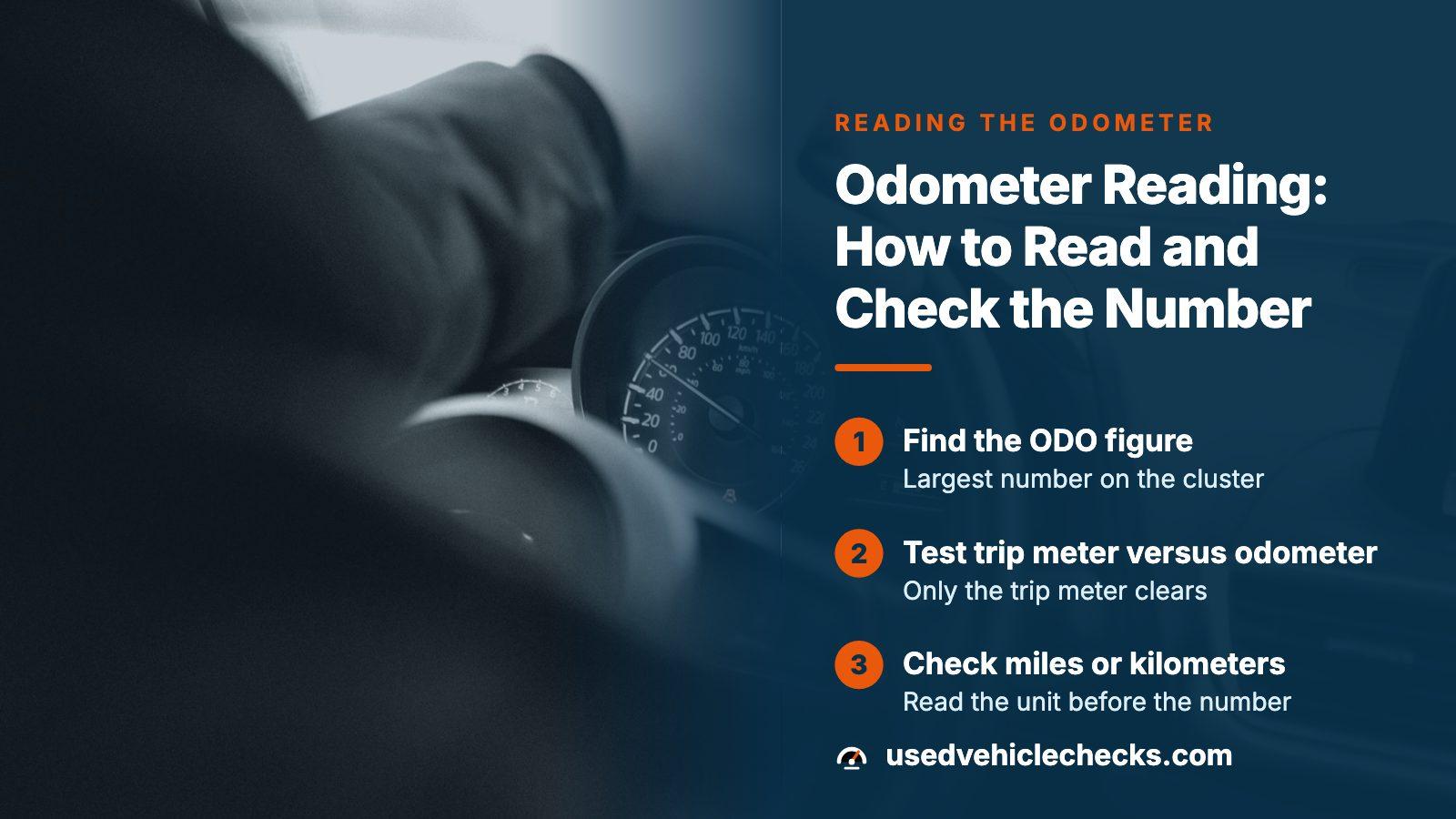
Turn the ignition on and look for the largest figure on the instrument cluster, often tagged ODO. A counter that drops to zero when you hold a button is a trip meter, not the odometer. Check whether the unit is miles or kilometers, then compare the number with the title mileage, service invoices and the readings recorded for the VIN. A reading that conflicts with that paper is the warning sign.
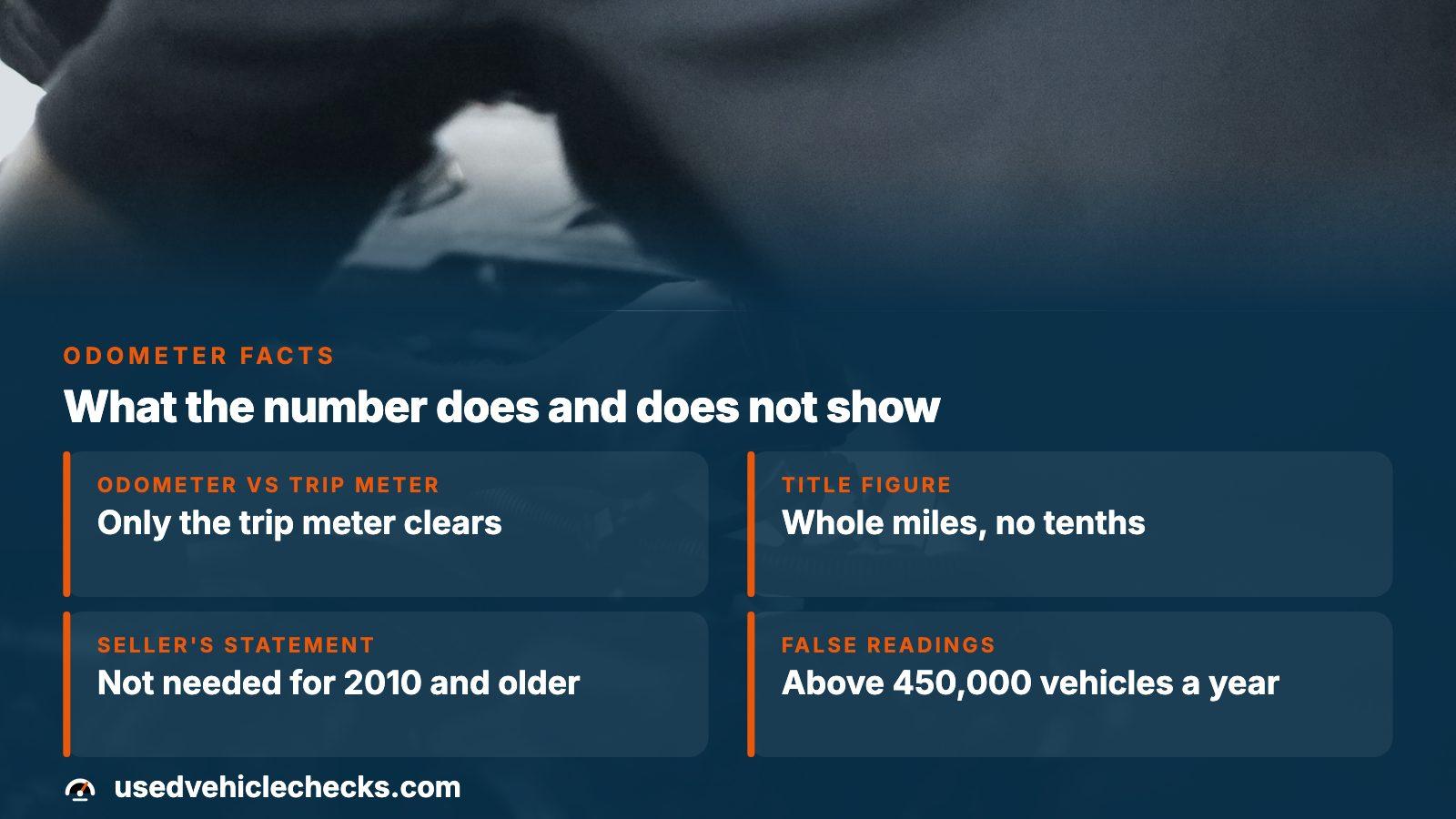
- Odometer vs trip meter
- Only the trip meter can be cleared by the driver
- Title figure
- Whole miles, with no tenths
- Seller's statement
- Not needed for model year 2010 or older; newer cars until age 20
- False readings
- NHTSA puts the yearly total above 450,000 vehicles
Finding the odometer on the cluster
Switch the ignition on without starting the engine, and most clusters light up and show the distance straight away. A digital display usually makes the odometer its biggest figure, sometimes tagged ODO or MILES. On an analog cluster, look for the wheel of mechanical digits that never moves on its own, apart from the smaller trip counter beside it.
- The stalk button at the tip of the wiper or turn signal lever steps through the trip computer screens.
- Steering wheel controls cycle the same screens on many cars.
- Dig through the center screen's vehicle info and service menus, which sometimes carry it.
- On a configurable cluster, change the display theme, because some layouts omit the odometer.
Odometer or trip meter: a two-second test
Two counters often sit side by side, and only one belongs on a title. Hold the reset button for a moment: whichever figure drops to zero is the trip meter.
| Counter | What it counts | Driver can clear it? | Where the figure goes |
|---|---|---|---|
| Odometer | Total distance since the car was built | No | Title, listing, price and service planning |
| Trip meter | Distance since you last cleared it, often with a tenth-mile digit; many cars carry two | Yes | Single trips only |
Federal rules leave tenths of a mile off the title figure, so write the whole-mile number. A trip meter reading copied onto a title by mistake leaves a mismatch that later buyers will stumble over.
Miles or kilometers: read the unit first
A car built for the American market counts miles. One that began life in Canada, Mexico or another country may display kilometers, and imports often do. A cluster showing 200,000 km has covered roughly 124,000 miles, so the unit changes the price you should pay. Find the label before comparing the figure with an advertisement, and be wary of a seller who quotes the kilometer number and lets you assume miles. Write the unit beside the figure in any note you keep.
Writing the reading down when a car changes hands
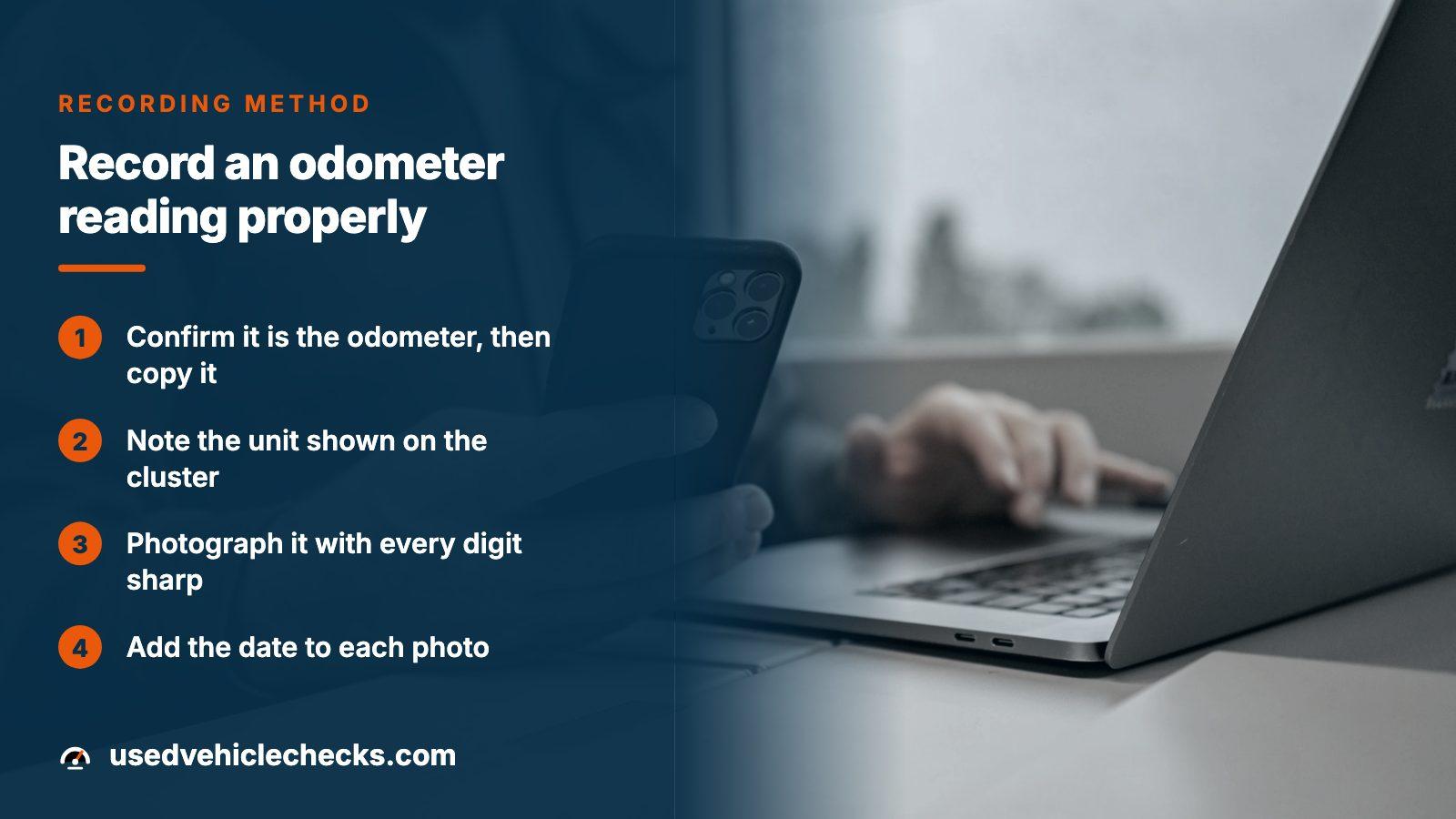
- Confirm it is the odometer, then copy it exactly, dropping any tenth-of-a-mile digit.
- Note the unit shown on the cluster.
- Take a photo with the ignition on and every digit sharp, and file it with the sale papers.
- Add the date. Dated photos taken at each service build mileage evidence you control.
The title or reassignment form carries the seller's signature and printed name beside the reading, plus the date, both parties' details and the vehicle's identity down to the VIN. The buyer countersigns and the seller gets a copy. Dealers must keep their copies for five years.
The statement under the number, and cars that skip it
Beneath the reading the seller picks one of three certifications. The first says the number reflects actual mileage as far as the seller knows. The second says the odometer has passed the highest figure it was designed to show. The third says the number is not valid, or is off by more than calibration error, and carries a warning notice to the buyer. The form also warns that a blank or false disclosure can bring fines or prison.
Some cars need no statement. A 2010 model or older is exempt. From model year 2011 on, the exemption begins only 20 years after January 1 of the model year, so a 2011 car still needs one until 2031. Silence on an old car is normal; silence on a newer one deserves a question.
Why the dash alone proves nothing
A digital reading is a stored number. Federal law bans selling or fitting a device that makes an odometer misreport, so the tools exist. NHTSA warns that altered digital units are tougher to catch than mechanical ones, since nothing visibly moves, and puts the yearly count of vehicles sold with a falsified reading above 450,000.
From an NHTSA owner complaint
A buyer in a private sale arranged through an online marketplace took home a 2016 Toyota Camry showing about 117,000 miles. Mechanical failures followed, and an independent mechanic found a discrepancy: the mileage was later found to be 257,080.
The cluster hid all of that. Only a comparison with other mileage figures reveals it. The national title system, NMVTIS, can show the latest reported odometer reading for a vehicle. UsedVehicleChecks is built on the same idea: the preview for a VIN costs nothing, and the paid report lists dated odometer readings to set against the dash.
Six ways to test the number you were shown
- Title: ask to see it and compare its mileage with the dash; study it closely if the notation is smudged.
- Stickers: oil change and service stickers on the windshield, door frame, glove compartment or engine bay each note a mileage to compare.
- Paperwork: invoices and inspection records should climb in date order with no step backward.
- Tires: at 20,000 or less on the dash, the car should still wear its original set.
- Pedals: wear on the gas, brake and clutch pedals should fit the miles shown.
- History report: it lists readings by date. If the seller offers none, run one on the VIN yourself.
No single test settles it. Agreement across several does.
When the display is off, or the cluster was replaced
Not every bad number is fraud. The odometer takes its signal from the same source as the speedometer, so a different tire size without recalibration moves both. The federal form makes room for this: a gap counts only when it exceeds calibration error.
From an NHTSA owner complaint
An owner of a 2016 Toyota Camry, who says they drive trucks between states, told NHTSA that a marked odometer checkpoint used by long-haul drivers showed the car counting a mile after only 4,900 feet. By the owner's account, three service visits did not fix it.
It is one owner's claim, not a finding, but it shows the dash figure can drift. A replaced cluster is the other innocent cause. A shop may swap an odometer if the mileage carries over. If not, the new unit starts at zero and a written notice on the left door frame records the old mileage and the date. Altering that notice to deceive is banned, so check the door frame and ask for the invoice.
If the numbers disagree
A mismatch calls for questions, not accusations. Ask the seller for the paperwork behind it. With none forthcoming, price the car as one of unknown mileage or leave.
- Money: a buyer who proves intent to defraud can claim the greater of triple the actual loss or $10,000, plus costs and a reasonable attorney's fee, if suit starts within 2 years of when the claim accrues.
- Reporting: NHTSA takes word of large schemes at 888-327-4236; a single car goes to your state enforcement agency.
- Advice: NHTSA cannot pursue claims for individual buyers and points them to a private attorney.
Before it gets that far, look first. Enter the VIN in the form on this page to open the preview. Payment for the report is one-off and amounts sit on the pricing page. It sets odometer readings beside title brands and the salvage and auction entries, some of which carry photos.
Where this information comes from
- NHTSA: odometer fraud — The 450,000 estimate, the buyer tips on titles, stickers, tires and pedals, the digital odometer warning and who takes reports.
- 49 CFR Part 580: odometer disclosure requirements — What the signed statement contains, the three certifications, five-year dealer copies and the age exemptions.
- 49 U.S.C. 32704: service, repair and replacement — The zero reset and the left door frame notice after an odometer is replaced.
- 49 U.S.C. 32710: civil actions by private persons — Triple damages or $10,000, the two-year limit and the fee award.
- NMVTIS: information for consumers — That the federal title system holds the latest reported odometer reading, and that its reports are short and can miss things.
- NHTSA owner complaint 11751016 — owner experience, paraphrased
- NHTSA owner complaint 11349563 — owner experience, paraphrased
Sources and photos: Facts checked against the sources above in November 2026. Photos by Miles Loewen, Anastasiia Nelen and Mustafa Sheikhmouss on Unsplash; diagrams by UsedVehicleChecks.
Keep reading
- Mileage Check by VIN: What the Recorded Odometer Readings ShowThe recorded readings for a VIN, listed in date order.
- Odometer Rollback Check by VIN: Run the Mileage Test Before You PayHow to test those readings for a step backward.
- Odometer Discrepancy Check: Find a Mileage Mismatch Before You PayWhat to do when the dash, the title and the records do not match.
- How Many Miles Is Too Many on a Used Car? Age, Pace and ProofJudging whether a believable number is still too high for the price.
Frequently asked questions
How do I check an odometer reading?
Compare the dash figure with the title mileage, dated service and inspection entries, and the wear on pedals and tires. Then look up the readings recorded for the VIN. A clean result only means no recorded reading disagrees: the federal title system calls its reports concise and admits reporting gaps.
Is it legal to reset or disconnect an odometer?
Not when the aim is to change the mileage it shows. Federal law bans disconnecting, resetting or altering an odometer for that purpose. Repair or replacement is allowed if the mileage stays the same, or the unit is zeroed and the door frame notice is attached. A trip meter reset is just a trip meter.
Do I have to state the mileage when I sell my car?
Usually. Federal law wants a signed written disclosure on the title at transfer, and the buyer countersigns. The exemption covers model year 2010 and older, plus newer cars once they reach 20 years. A seller who knows the display is wrong must say so on the form.
Does a digital odometer make the mileage more trustworthy?
No. NHTSA says altered digital units are tougher to catch than mechanical ones, since nothing visibly moves. It points buyers to the vehicle's condition and a detailed history report instead.
Why does my odometer disagree with a GPS trip?
Small differences are normal. The odometer shares a signal with the speedometer, so tire size changes without recalibration shift both, and the federal form counts a gap as a discrepancy only when it exceeds calibration error. To test it, reset a trip meter and compare it with a navigation app.
Now check the car itself
The guide explains what to look for. The report shows what this VIN has on record.